When you order a custom political flag, the fabric is the decision that quietly determines whether the flag flies on a still morning, how it holds its color through a summer of sun, and how many weeks it lasts before it frays to ribbons. Two flags printed with the identical design can behave nothing alike outdoors because one is light knitted polyester and the other is heavy woven polyester. Most buyers pick a size and a design and let the shop choose the cloth by default. That is a mistake worth a few minutes to avoid, because the fabric is where durability, wind performance, and print quality all get decided at once.
The fabrics you will actually be quoted
Four materials cover almost every custom flag order. Nylon, typically around 200 denier, is the lightweight workhorse: it takes bright, vivid color and flies in the gentlest breeze, which is why it dominates the retail flag market. Knitted polyester is the standard canvas for dye-sublimated custom printing, light enough to fly easily and open enough in weave to let ink migrate cleanly through the fabric. Two-ply spun polyester is the heavyweight, a dense cloth with a cotton-like hand that is built for punishment and long outdoor runs. And traditional cotton, while historically important, is effectively an indoor and ceremonial material now, unsuited to sustained weather.
For a printed political flag specifically, the real choice is usually between knitted polyester and a heavier woven or spun polyester. Nylon enters the conversation when you want maximum color pop in a low-wind area, and cotton essentially does not, unless the flag is meant for a stage or a one-day indoor event. Knowing which two options you are actually deciding between keeps the quote conversation short and honest.
Wind is the deciding factor most buyers overlook
Every fabric has a wind speed below which it simply hangs on the pole. Lightweight materials solve the problem of a flag that never flies. Nylon lifts and moves in winds under about five miles per hour, and knitted polyester behaves similarly, which is exactly why both are favored where the air is often calm. Heavier fabrics need real, consistent wind to open. Two-ply spun polyester generally wants sustained winds around ten miles per hour or more to display properly, and the heaviest 600-denier woven polyester needs even more.
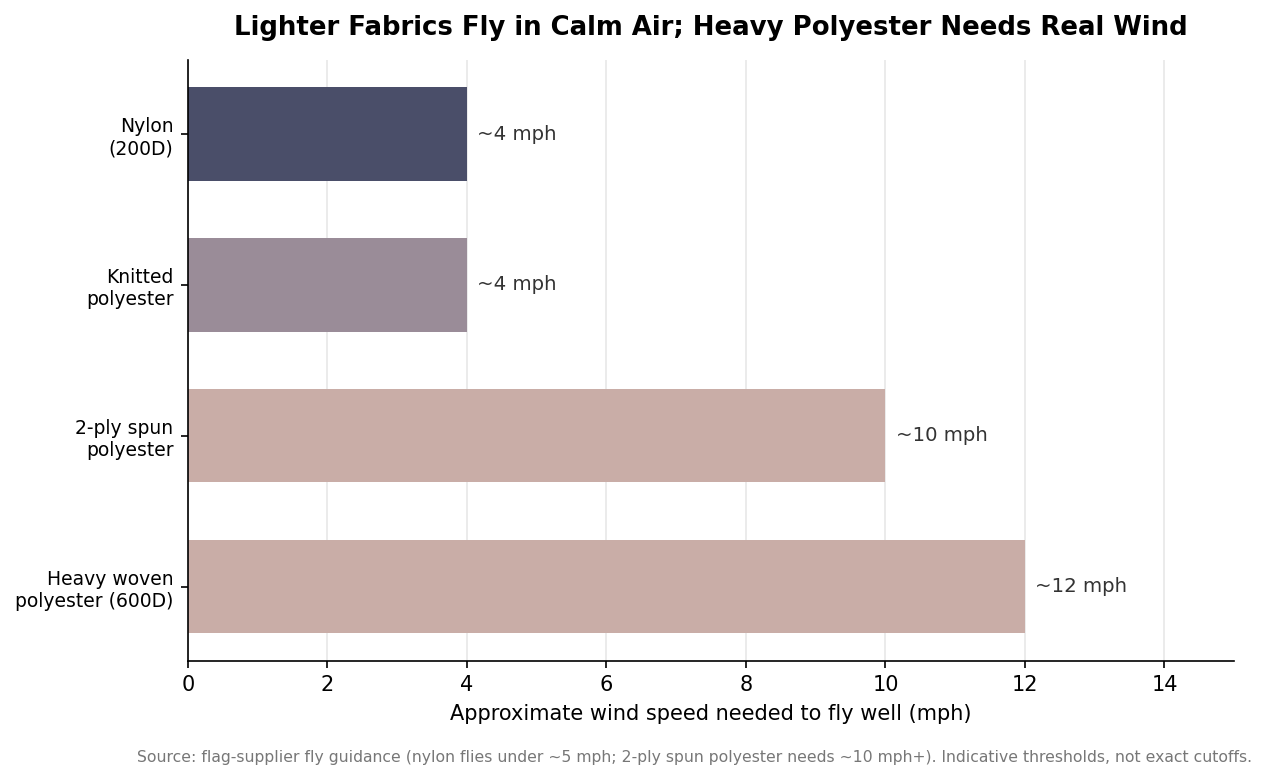
The practical read is to match the cloth to the local climate, not to a general instinct that heavier is always better. A flag on a residential street in a low-wind region, flown to be seen by neighbors and slow traffic, will look dead most of the day if you over-specify the fabric, because it will hang limp except in gusts. In an open field, on a coast, or on a tall pole where wind is constant and strong, the calculus flips entirely, and the light fabric that flew beautifully downtown will shred in a week. The wind at the actual location should drive the weight of the cloth.
How long each fabric survives in the weather
Continuous outdoor display is brutal on any flag, and the fabric sets the pace of wear. Standard nylon and printed polyester flown around the clock commonly deliver on the order of ninety days of good service before fading and fraying become obvious, though the number swings widely with conditions. Cotton outdoors is far shorter-lived, often thirty to sixty days, which is another reason it has retreated indoors. Heavy two-ply and 600-denier polyester push past the standard mark, especially in harsh, high-wind climates where their density is an asset rather than a liability.
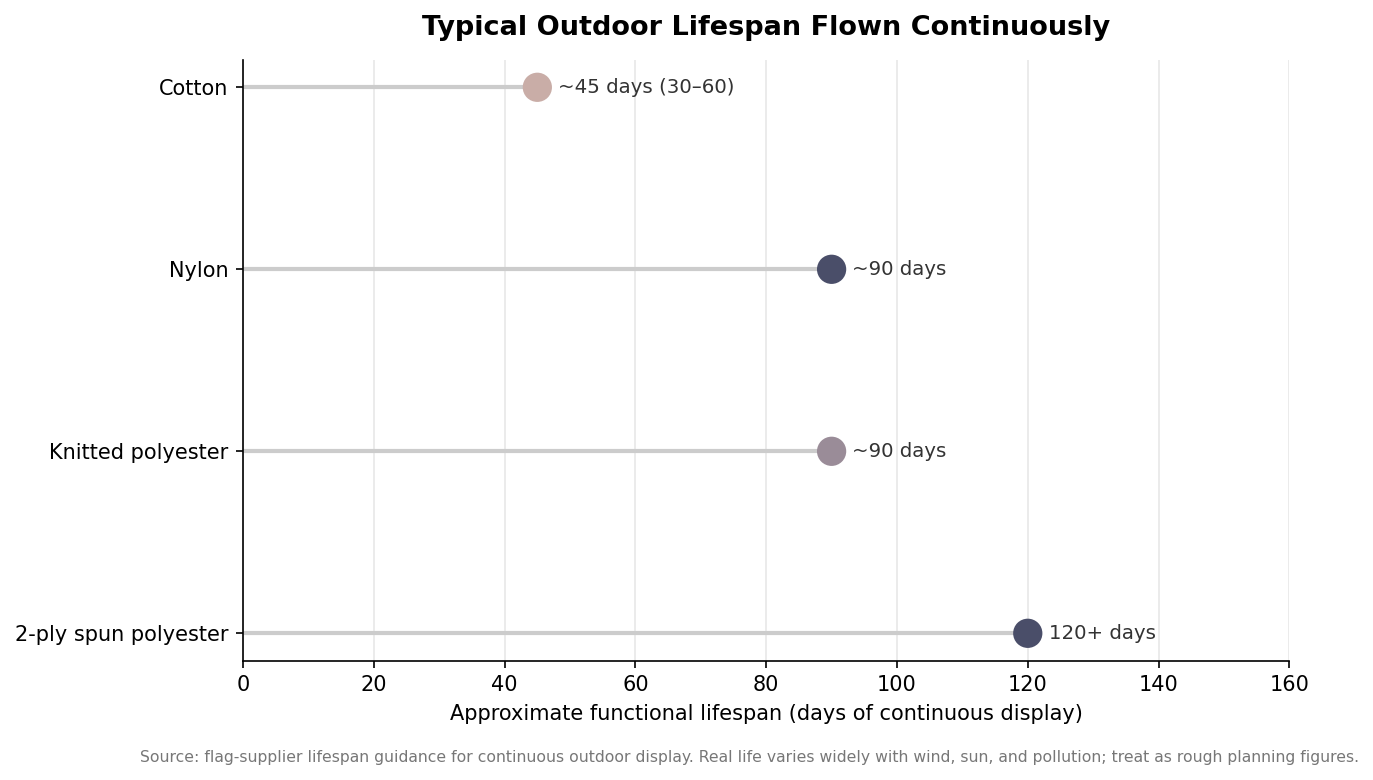
Treat these as rough planning figures, not guarantees. A flag flown only on weekends, taken down in storms, and rotated with a spare will outlast one left up continuously through a brutal summer by a wide margin. The useful move for a campaign is to plan the buy around the display pattern: if flags will fly nonstop for a three-month stretch, budget for at least one replacement cycle on lighter fabrics, or step up to a heavier polyester that can go the distance. Ordering a single set of light flags for a full season of continuous display is how campaigns end up with sun-bleached, tattered flags in the final, most-watched weeks.
Print method rides on the fabric choice
How your design reproduces is tied directly to the cloth. Dye-sublimation on knitted polyester is the modern default for custom flags because the ink becomes part of the fiber and the open knit lets a large share of the image bleed through to the back, giving you a readable, if mirrored, reverse side from a single printed layer. That single-reverse construction is lighter, cheaper, and flies more easily. When you need the design to read correctly, not mirrored, on both sides, the flag is built double-sided, with two printed layers sewn around an internal blockout liner, which roughly doubles the material and the weight. Denser fabrics and heavier inks show through less, so the show-through you can expect is itself a function of the fabric you pick.
This is why the fabric conversation should come before the artwork conversation, not after. A design with fine text or a logo that must be perfectly legible on the reverse pushes you toward double-sided construction and a fabric that supports it, which in turn affects wind performance and price. Deciding the cloth first lets every downstream choice fall into place instead of fighting the material.
Matching fabric to where the flag will fly
The whole decision reduces to two questions: how much wind, and how long. For a low-wind location flown intermittently, light knitted polyester or nylon gives you vivid color, easy flight, and a reasonable price, with the understanding that you may reorder if display runs long. For an exposed, high-wind location flown continuously, a heavier woven or spun polyester is worth the premium because it will fly properly and survive the season. For anything indoors or single-day and ceremonial, the fabric barely matters and even cotton is fine.
Ask the supplier which fabric a quote assumes, and ask what wind and lifespan it is built for, before you compare prices. A cheaper flag on the wrong cloth is not a bargain if it hangs limp downtown or disintegrates in a coastal gale. Spend the fabric decision deliberately and the flag does its job for the full run you bought it for.